Would You Rather - Ice Breaker Game
🎯 Quick Summary
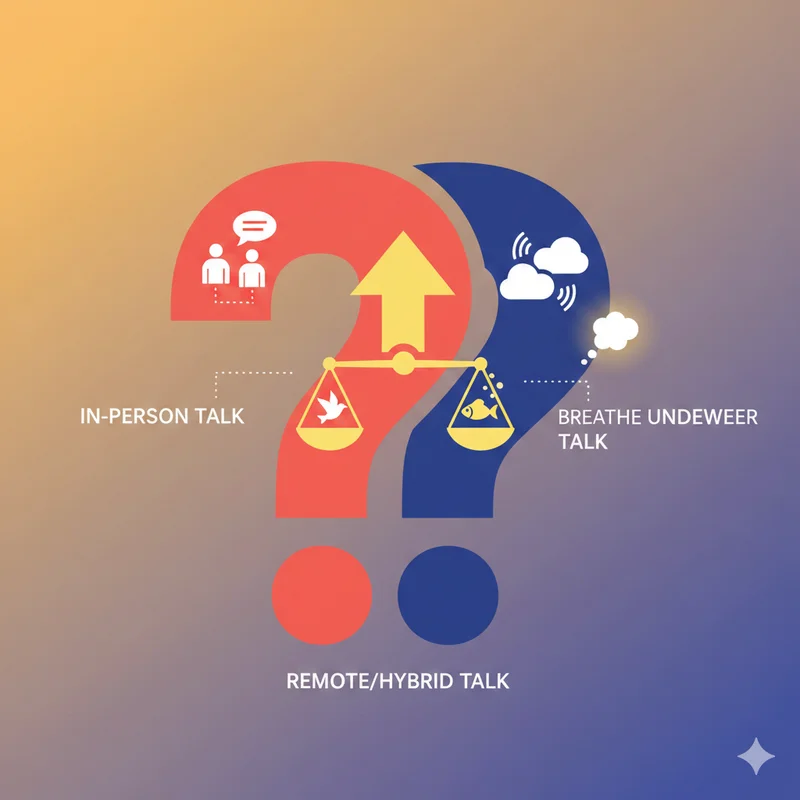
Players choose between two hypothetical options (like 'fly or breathe underwater?') and explain why, sparking debate and revealing preferences.
✅ Why This Ice Breaker Game Works
- •This ice breaker has been used by 2,569 teams worldwide
- •Rated 4.6/5.0 by 226 facilitators who used this icebreaker game
- •Perfect ice breaker for: Fun, Deep Talk
📝 How to Play Would You Rather Ice Breaker (Step-by-Step)
Step 1: Setup & First Question
2 min💬 Say This:
"Alright everyone, we're playing Would You Rather! I'll ask you questions with two options, and you pick one and tell us why. There's no right answer - just share your honest choice and reasoning. Ready? First question: Would you rather be able to fly or breathe underwater?"
📋 What to Do:
- 1.Prepare 5-10 Would You Rather questions in advance (adjust based on time available)
- 2.Mix light/fun questions with thought-provoking ones
- 3.Go around the circle asking one person at a time, or let anyone jump in
- 4.Start with an easy, fun question to warm up the group
- 5.Encourage participants to explain their reasoning, not just their choice
💡 Pro Tips:
- •Choose questions appropriate for your group's comfort level - some can be silly, others deep
- •Good starter questions: superpowers, food preferences, travel scenarios, minor inconveniences
- •For large groups, have people vote by raising hands or moving to different sides of the room
- •Virtual tip: use Zoom polls for quick voting, then unmute for discussion
- •Keep a backup list of questions in case some fall flat
Step 2: Discussion & Debate
10 min💬 Say This:
"Interesting! I'm seeing some split opinions here. Sarah, you said fly - tell us more about why. Mark, you chose underwater - what's your thinking? Anyone else want to jump in? Has anyone changed their mind after hearing the reasoning?"
📋 What to Do:
- 1.Ask follow-up questions to dig deeper: 'Why that option?' 'What would you do with that ability?'
- 2.Encourage friendly debate between people with different choices
- 3.Notice if anyone changes their mind and ask what convinced them
- 4.Move to next question when discussion naturally winds down
- 5.Aim for 1-2 minutes per question, adjusting based on engagement
- 6.If a question bombs, move on quickly - not every question lands!
💡 Pro Tips:
- •The best questions create genuine dilemmas where both options are appealing or terrible
- •Watch for quieter participants and invite them to share: 'Alex, we haven't heard from you yet - which would you choose?'
- •Let debates happen naturally but intervene if anyone gets too heated
- •Example questions: 'Would you rather spend a year with the same song stuck in your head or an itch you can't scratch?' 'Lose all memories from this year or all money made this year?'
- •For deeper connection: 'Would you rather know how you die or when you die?' (only for comfortable groups!)
Step 3: Reflection & Favorites
3 min💬 Say This:
"Great discussions everyone! Which question was the hardest to answer? Did anyone learn something surprising about a teammate? Before we wrap up, let's do one final question - and this one's a doozy: [Ask your most interesting/challenging question]"
📋 What to Do:
- 1.Ask the group which question was most difficult or most fun
- 2.Invite participants to share what surprised them about others' answers
- 3.End with your most interesting question for a strong finish
- 4.Optional: Let participants suggest their own Would You Rather questions
- 5.Thank everyone for their honesty and openness
💡 Pro Tips:
- •The 'surprising learning' reflection helps solidify the bonding that occurred
- •Save your best/most thought-provoking question for last to end on a high note
- •Consider creating a shared doc where team members can add Would You Rather questions for future meetings
- •This game is highly replayable with new questions - bookmark it for regular meetings
- •For ongoing teams, revisit the same questions months later to see if answers have changed
⚠️ Common Questions (Avoid Problems)
Q: What if the questions are too easy or too hard?
A: Adjust the difficulty based on your group! For easy questions, try food/travel preferences. For moderate, use scenarios with real-world tradeoffs. For challenging, explore ethical dilemmas or deep values. Start easy and gauge interest - you can always level up. Have a mix prepared so you can pivot based on the room's energy.
Q: What if someone doesn't want to answer a question?
A: Always allow passing! Say 'It's totally fine to skip any question that doesn't feel right.' If multiple people pass on the same question, it might be too personal - move on quickly. Alternatively, let that person suggest an alternate question they'd prefer to answer. The goal is fun, not discomfort.
Q: How do I keep the game moving if debates get too long?
A: Set a soft time limit per question (1-2 minutes). If a debate runs long, summarize the key points: 'Great discussion! I'm hearing that team fly values freedom, team underwater values exploration. Let's move to the next one!' You can always return to a popular question at the end if time allows.
🎁 Free Tools for This Game
💼 Need It Ready Faster? Pro Tools Save 3+ Hours
Everything above is free. These tools just save you time preparing.
PDF Handout
Print-ready participant guide + host notes
✓ Professional layout
✓ Branded (optional)
✓ Instant download
PPT Deck
Editable slides with rules & examples
✓ Fully customizable
✓ Add your branding
✓ Save as template
Smart Timer
Auto-paced with sound alerts
✓ Step-by-step timing
✓ Visual countdown
✓ Share screen ready
Adapt this game to your team culture, industry, or goals
Export clean files without FreeIceBreaker branding
Then just $9/month • Cancel anytime
⭐ 2,391 teams upgraded • "Saved me 3 hours every month" - Sarah K.