Personality Shapes - Ice Breaker Game
🎯 Quick Summary
Choose a shape (square, triangle, circle, or squiggly) that matches your personality and discover your work style traits.
✅ Why This Ice Breaker Game Works
- •This ice breaker has been used by 592 teams worldwide
- •Rated 4.8/5.0 by 88 facilitators who used this icebreaker game
- •Perfect ice breaker for: Team Building, Deep Talk
📝 How to Play Personality Shapes Ice Breaker (Step-by-Step)
Step 1: Shape Introduction & Selection
5 min💬 Say This:
"Welcome to Personality Shapes! I'm going to draw four shapes on the board, and each one represents a different personality type. Your job is simple: pick the ONE shape that best represents you. There's no right or wrong answer - just go with your gut feeling about which shape resonates most with your personality. Ready? Here are the shapes and what they mean..."
📋 What to Do:
- 1.Draw four shapes clearly on a whiteboard: square, triangle, circle, squiggly line
- 2.Explain each shape's personality traits:
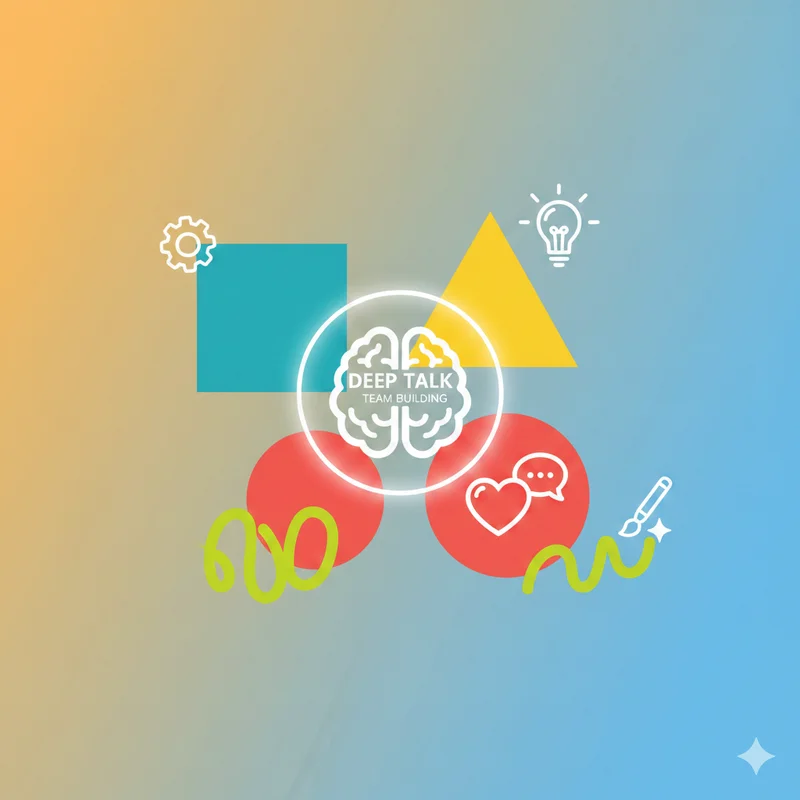
- 3. SQUARE: Detail-oriented, organized, hate clutter, hesitant to change, stubborn, structured
- 4. TRIANGLE: Multi-tasker, self-motivated, ambitious, impatient, successful, driven
- 5. CIRCLE: Team-oriented, empathetic, compassionate, want to 'fix' everyone, reluctant to say no, harmonious
- 6. SQUIGGLE: Creative, adaptable, idea generator, easily bored, love trying new things, innovative
- 7.Give participants 1-2 minutes to choose their shape
- 8.Optional: have participants write their names on sticky notes under their chosen shape
- 9.Count how many people chose each shape and display the distribution
💡 Pro Tips:
- •Emphasize: 'Pick the shape that MOST represents you - we all have a bit of each, but one dominates'
- •Read trait descriptions slowly so people can process and self-reflect
- •For visual learners, write the traits next to each shape on the board
- •Virtual teams: use polling feature or have people type their shape in chat
- •Some people will waffle between two shapes - encourage them to pick their gut reaction
- •Reference Connie Podesta's work on personality shapes for deeper insights
Step 2: Group Discussion & Insights
10 min💬 Say This:
"Interesting! Look at our shape distribution. [Comment on results: 'Lots of circles - we're a people-focused team!' or 'Equal split - we have balance!']. Now, let's talk about what this means. Squares, what's it like being detail-oriented on a team full of spontaneous squiggles? Circles, how do you handle working with impatient triangles? Let's explore how our shapes interact!"
📋 What to Do:
- 1.Point out the shape distribution: majority shape(s), minority shape(s), balance
- 2.Facilitate discussion by shape: 'All the squares, raise your hands. What's true about you?'
- 3.Ask cross-shape questions: 'Triangles, how do you feel when circles move slowly and carefully?' 'Squiggles, what frustrates you about squares' resistance to change?'
- 4.Encourage participants to share examples from work: 'When has your shape helped you? Hindered you?'
- 5.Discuss collaboration strategies: 'How can a square and squiggle work together successfully?'
- 6.Invite reflection: 'Did anyone's shape choice surprise you? Or confirm what you already knew?'
💡 Pro Tips:
- •The real value is in the discussion, not the test itself!
- •Point out complementary pairings: squares bring structure to squiggles' chaos, circles smooth triangles' impatience
- •Watch for 'aha moments': 'So THAT'S why we clash on deadlines - you're a J and I'm a P!'
- •If there's a majority shape, discuss pros/cons: 'All circles is great for harmony but who makes tough decisions?'
- •Address stereotypes gently: 'Not all triangles are aggressive, not all circles are pushovers'
- •Connect to real work scenarios: project planning (squares excel), brainstorming (squiggles shine), team conflicts (circles mediate), execution (triangles drive)
Step 3: Application & Takeaways
5 min💬 Say This:
"So, what can we DO with this knowledge? Understanding each other's shapes helps us communicate better, divide tasks smarter, and resolve conflicts faster. Squares, maybe give squiggles advance warning before big changes. Triangles, practice patience with circles' need for consensus. Everyone, recognize that different shapes bring different strengths. What's one thing you'll remember about your teammates' shapes?"
📋 What to Do:
- 1.Summarize key insights: 'We're a [description based on shape distribution] team'
- 2.Invite practical applications: 'How will knowing shapes change how we work together?'
- 3.Encourage specific commitments: 'What's one adjustment you'll make based on today?'
- 4.Optional: create a visual 'team shape map' showing everyone's shapes for future reference
- 5.Remind everyone: shapes are a tool for understanding, not an excuse for behavior
- 6.End with: 'What's the most valuable thing you learned about your team today?'
💡 Pro Tips:
- •Great takeaways: 'Assign detail work to squares, big-picture thinking to squiggles, team harmony to circles, project leadership to triangles'
- •Warning: 'Your shape explains tendencies, but doesn't limit you - grow beyond your shape!'
- •For ongoing teams, reference shapes in future meetings: 'That's your triangle coming out!' (lightheartedly)
- •Follow-up idea: revisit shapes in 6 months and see if anyone's changed
- •Connect to other frameworks: MBTI, DiSC, Enneagram - all reveal similar patterns
- •End on growth: 'Knowing your shape helps you consciously develop traits from other shapes'
⚠️ Common Questions (Avoid Problems)
Q: What if I feel like I'm multiple shapes or no shape fits perfectly?
A: That's normal! Most people have a dominant shape with secondary traits from others. The framework is about identifying your PRIMARY tendency, not boxing you in completely. If you're torn between two shapes, ask yourself: 'Under pressure, which behavior dominates?' That's likely your core shape. You can also acknowledge being a 'blend' - like a 'circle with triangle edges.'
Q: Is this scientifically valid or just a fun exercise?
A: Personality Shapes is a simplified framework for understanding behavioral tendencies, developed by psychologist Connie Podesta. While not as rigorous as MBTI or Big Five personality tests, it's a useful conversation starter and provides valuable insights into work styles. Treat it as a lens for understanding, not a definitive diagnosis. The real value is in the discussions it sparks, not its scientific precision.
Q: What if someone uses their shape as an excuse for bad behavior?
A: Shut that down gently but firmly: 'Your shape explains tendencies, but doesn't excuse behavior. Being a triangle doesn't give you permission to be rude, and being a circle doesn't mean you can avoid tough decisions.' Frame shapes as a tool for self-awareness and growth, not justification. Encourage people to lean into less-dominant shapes when needed: 'Can you channel your inner square for this detail-oriented task?'
🎁 Free Tools for This Game
💼 Need It Ready Faster? Pro Tools Save 3+ Hours
Everything above is free. These tools just save you time preparing.
PDF Handout
Print-ready participant guide + host notes
✓ Professional layout
✓ Branded (optional)
✓ Instant download
PPT Deck
Editable slides with rules & examples
✓ Fully customizable
✓ Add your branding
✓ Save as template
Smart Timer
Auto-paced with sound alerts
✓ Step-by-step timing
✓ Visual countdown
✓ Share screen ready
Adapt this game to your team culture, industry, or goals
Export clean files without FreeIceBreaker branding
Then just $9/month • Cancel anytime
⭐ 2,391 teams upgraded • "Saved me 3 hours every month" - Sarah K.